3rdNew Town Jamtara, Opposite Gandhi Maidan, Near C.M Excellence Girls High School, Jamtara, Post+Distt- Jamtara, PS- Jamtara, Pin- 815351 (Jharkhand)

Aerobic wastewater treatment systems utilize oxygen-dependent bacteria, protozoa, and specialized microbes to purify water, unlike anaerobic systems that operate without oxygen. These systems enhance the natural microbial decomposition process to eliminate contaminants found in industrial wastewater for effective removal.
The microorganisms in these systems break down organic contaminants, which are typically quantified in terms of biological oxygen demand (BOD). BOD measures the quantity of dissolved oxygen required by aerobic organisms to decompose organic substances into simpler compounds. Elevated BOD levels indicate a high concentration of biodegradable substances in the wastewater, often resulting from the introduction of pollutants like industrial discharges, domestic sewage, or agricultural runoff.
Aerobic systems, which rely on organisms that require oxygen, necessitate the provision of oxygen to the biomass. This can be achieved through the use of wastewater treatment ponds, which introduce air to the wastewater by creating a large surface area, or by incorporating mechanical aeration devices. The composition of the wastewater and the effluent requirements determine the specific processes and microorganisms involved in a biological wastewater treatment system. Operational procedures must be tailored to maintain optimal biomass growth rates for the microbial populations in the given environment. Monitoring and adjusting aeration is often necessary to ensure a consistent level of dissolved oxygen, which is crucial for the bacteria to multiply at the required rate for meeting discharge requirements.
Apart from dissolved oxygen, biological systems also need to be balanced in terms of flow, load, pH, temperature, and nutrients. Achieving a balance among these factors can make the biological treatment process quite intricate. Below, you will find examples of various types of aerobic biological wastewater treatment systems commonly used in industrial facilities. These descriptions will provide you with an understanding of the technologies and systems that could be beneficial for your specific industrial facility.
| Physical States | LIQUID | POWDER |
|---|---|---|
| Appearance | Tortilla brown | Swiss coffe brown |
| Odor | Smell of media & micro organisms is present | Odorless |
| Moisture Content | 100% | 15% -17% |
| Mesh Size | N/A | 0.4 mm-0.8 mm. |
| Packaging | 50 ltr drum, 1 ltr bottle | 1 kg Aluminum Standing Pouch |
Merge 1 kilogram of EffuTreat AEROBIC Bioculture with 1 kilogram of liquid jaggery, and subsequently add this combination to 100 liters of feed water. (2Kg in 200 Litres & so on...)
EffuTreat culture, consisting of advantageous microorganisms, flourishes in environments abundant in oxygen. In such conditions, it assumes a crucial function in decomposing organic pollutants and contaminants. Its growth is not limited to a specific temperature range, as it can thrive within a wide span of 12°C to 52°C. Upon introduction into wastewater treatment systems, EffuTreat rapidly multiplies, resulting in an increased biomass content. By harnessing the inherent capabilities of nature, aerobic bioculture proves to be a highly efficient method for wastewater purification.
Anaerobic wastewater treatment systems utilize oxygen-dependent bacteria, protozoa, and specialized microbes to purify water, unlike anaerobic systems that operate without oxygen. These systems enhance the natural microbial decomposition process to eliminate contaminants found in industrial wastewater for effective removal.
The microorganisms in these systems break down organic contaminants, which are typically quantified terms of biological oxygen demand (BOD). BOD measures the quantity of dissolved oxygen required b aerobic organisms to decompose organic substances into simpler compounds. Elevated BOD levels indicate a high concentration of biodegradable substances in the wastewater, often resulting from the introduction of pollutants like industrial discharges, domestic sewage, or agricultural runoff.
The Anaerobic wastewater treatment process is composed of two distinct stages. The first stage is known as the acidification stage, where anaerobes are responsible for breaking down complex organic compounds into acid or short-chain volatile acids. This initial step is crucial in preparing the wastewater for further treatment. Moving on to the second stage, known as the methane production phase, it consists of two important steps. The first step is acetogenesis, where the anaerobes synthesize the acids produced in the acidification stage to form acetate, carbon dioxide, and hydrogen gas. This step is essential in the conversion of the organic compounds into usable byproducts. The second step in the methane production phase is methanogenesis. In this step, the anaerobes act upon the newly created molecules to form carbon dioxide and gas. These byproducts can be utilized as fuel if necessary, while the wastewater itself is directed towards additional treatment or discharge. To cater to different applications and facility requirements, anaerobic treatment systems can be designed and configured as either single-stage or multi-stage units. This flexibility allows for customization and optimization of the treatment process to achieve the desired results efficiently. In summary, the anaerobic treatment cycle involves the introduction of wastewater into a bioreactor receptacle. This receptacle contains a thick semi-solid substance called sludge, which is teeming with anaerobic bacteria and other microorganisms. These microorganisms play a crucial role in breaking down the organic contaminants present in the wastewater, ultimately leading to the production of usable byproducts and the purification of the wastewater.
Effu Treat Anaerobic consists of a blend of natural and safe bacteria that possess the capability to degrade multiple pollutants under anaerobic conditions. The bacteria found in EffuTreat (Anaerobic) exhibit exceptional stability. These bacteria are microencapsulated and packaged in a dormant state, ensuring a reactivation rate of 95% to 98% within their two-year shelf life. Each strain is carefully isolated from nature and cultivated in our facility. Only a precisely balanced combination of bacterial strains, like Effu Treat (Anaerobic), can effectively break down various pollutants into harmless byproducts.
| Physical States | LIQUID | POWDER |
|---|---|---|
| Appearance | Tortilla brown | Swiss coffe brown |
| Odor | Smell of media & micro organisms is present | Odorless |
| Moisture Content | 100% | 15% -17% |
| Mesh Size | N/A | 0.4 mm-0.8 mm. |
| Packaging | 50 ltr drum, 1 ltr bottle | 1 kg Aluminum Standing Pouch |
Merge 1 kilogram of EffuTreat ANAEROBIC Bioculture with 1 kilogram of liquid jaggery, and subseque this combination to 100 liters of feed water. (2Kg in 200 Litres & so on...)
With SepTreat Septic, you can rest assured that your septic system will remain in optimal condition, thanks to its preventive measures against sludge accumulation and blockages. By using this product, you can save both time and money that would otherwise be spent on costly maintenance and repairs.
The easy application makes SepTreat Septic a convenient solution for maintaining a healthy septic system, ensuring that your property remains free from unpleasant odors associated with septic tanks. By introducing SepTreat Septic into septic systems, the beneficial bacteria become active and release enzymes that effectively decompose and digest organic wastes like feces, urine, grease, fats, food scraps, detergents, and others.
This bioculture of environmentally safe microbes quickly multiplies within the septic system, revitalizing its biological well-being and improving its overall efficiency. SepTreat septic bacteria secrete a group of proteins that are naturally produced by bacteria. Enzymes have a specific function in breaking down organic matter and are not living organisms.
Bacteria generate enzymes which act as catalysts for anaerobic digestion. These enzymes break down complex molecules into smaller, more easily digestible molecules for bacteria. Consequently, enzymes play a crucial role in accelerating the decomposition of organic waste in septic tanks.
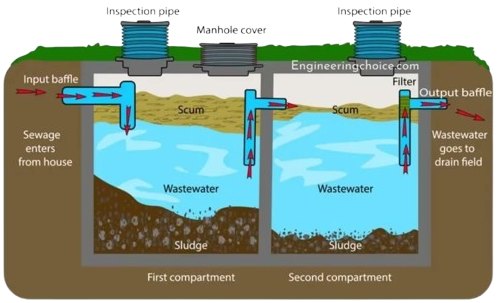
Septic Tank System
SepTreat septic introduces a large number of bacteria into the septic tank to facilitate the decomposition of organic matter and aid in the digestion process within the tank.
Trust in SepTreat Septic to keep your septic system running smoothly and efficiently, allowing you to enjoy peace of mind knowing that your system is well taken care of.
Copyright @ 2025 SRNBS Services Foundation . All Rights Reserved.